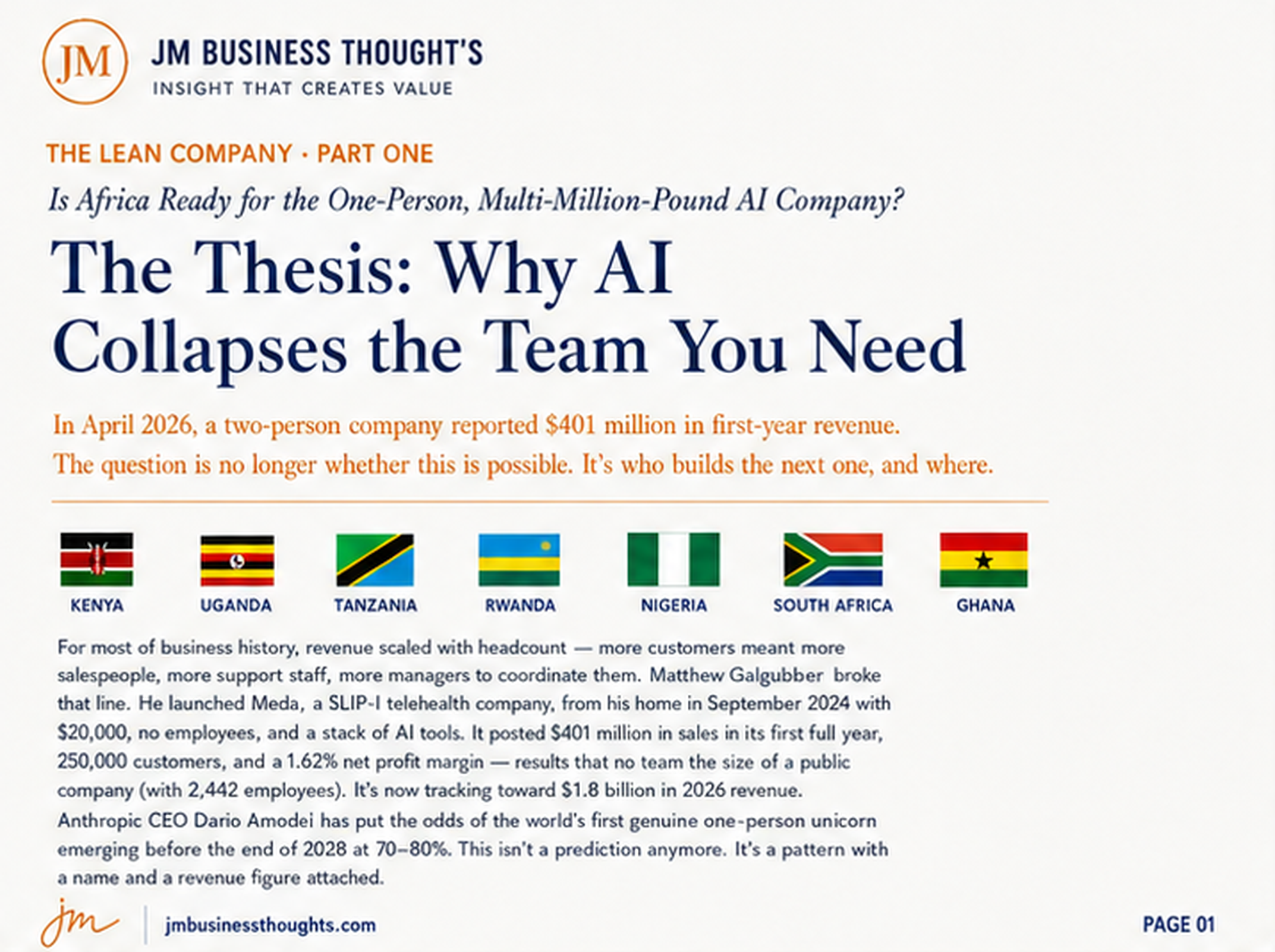
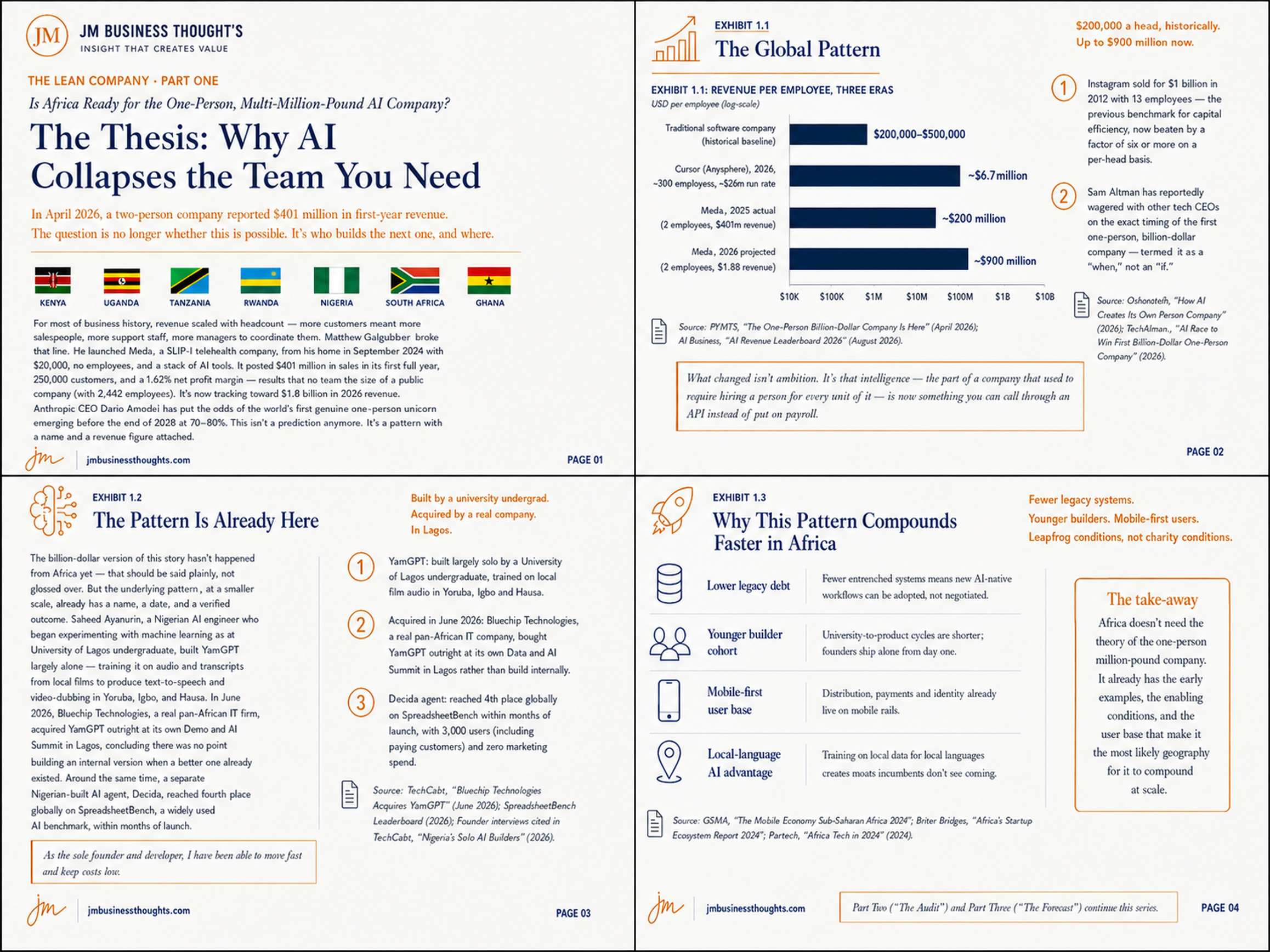
The billion-dollar version of this story has not happened from Africa yet — that should be said plainly, not glossed over. But the underlying pattern, at a smaller scale, already has a name, a date and a verified outcome.
Saheed Ayanurin, a Nigerian AI engineer who began experimenting with machine learning as a University of Lagos undergraduate, built YamGPT largely alone — training it on audio and transcripts from local films to produce text-to-speech and video-dubbing in Yoruba, Igbo and Hausa. In June 2026, Bluechip Technologies, a real pan-African IT firm, acquired YamGPT outright at its own Data and AI Summit in Lagos, concluding there was no point building an internal version when a better one already existed.
Around the same time a separate Nigerian-built AI agent, Decida, reached fourth place globally on SpreadsheetBench — a widely used AI benchmark — within months of launch, with 3,000 users including paying customers and zero marketing spend.
Neither outcome is a billion-dollar event. Both are proof that the input requirements have collapsed: a single builder, local training data, no distribution budget, and an acquisition by a commercial buyer rather than a grant-funded programme.